

Circle Bird Press Poet Interviews #1 : Jenny Mitchell

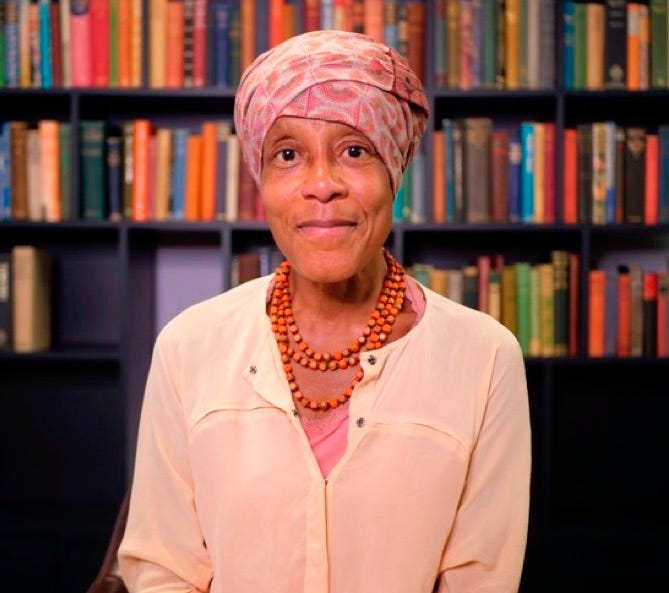
Jenny Mitchell has three poetry collections. The debut Her Lost Language was joint winner of the Geoff Stevens Memorial Prize; Map of a Plantation won the Poetry Book Awards, and is a university set text; Resurrection of a Black Man contains three prize-winning poems and is featured on Poetry Unbound. She’s won numerous competitions, including the Gregory O’Donoghue Prize and the Southword Subscriber’s Prize etc. She’s widely anthologised, and was the inaugural Poet-in- the-Community for Cork City Libraries in 2025. She’s a poetry co-editor for the Morning Star and a poetry facilitator for the Irish Writer’s Centre.
In the spring of 2024, I had the pleasure of attending a series of workshops led by Jenny during her residency at Sussex University. A year-and-a-half later, after the creation of Circle Bird Press, I decided to reconnect with Jenny in order to share her wisdom in regards to creativity, community and hope. On a windy autumnal day, we met in Herne Hill and spoke over tea. Here is what we talked about:
How do spirituality and creativity work together for you?
I don’t have an orthodox religious belief but in terms of my creativity, I don’t believe I’d be able to do my work if I didn’t have a sense of the spiritual. There is so much that works against me historically that I can’t just depend on the external world as a sign that I’m going in the right direction.
My work is based on many years’ research into British transatlantic enslavement, and within that barbaric system Black people faced enforced illiteracy. By writing about the legacies of these histories, I’m going against hundreds of years of oppression that still impacts all of us today, not only Black people.
The idea that enslavement ended with so-called abolition simply isn’t true, unfortunately, because emancipation never really happened. As many people know, at the official end of enslavement in Jamaica in 1838, it was the white enslavers who were compensated financially, whilst the enslaved were given nothing. This then impacted the educational, housing and creative opportunities for descendants of the enslaved.
To insist on creativity for myself takes a lot of willpower, and I don’t believe that I have that willpower all on my own. I believe there is a force that’s not just about me. On good days, I believe I’m here to be creative, even if it’s just to save myself with my own creativity. I’ve had many times when it felt completely wrong to continue because of the realities of money. But it feels so important to me, and when I get the chance to work with others, that feels like confirmation that I’m going in the right direction.
For example, several years ago I developed and ran a project called Inner Vision, which worked with national museums to facilitate creative opportunities for children and young people. One of the participants in Southwark was an eleven-year-old boy of African heritage. He went to several workshops at Tate Modern where he proved to be a genius when it came to visual art. This may have been uncovered at another time but I’m so glad I was able to be part of that story.
I’m interested in the remark you made about using creativity to save yourself. Can you tell me more about that?
It’s hard to touch upon these things - I don’t want to say too much because it’s private, and the privacy of it makes something grow. But I believe in transformation, and I have changed a lot in my own life.
I’m very boundaried in my work, and I work hard not to allow others to dump their stuff on me in a work environment. I’ve got enough to carry, and I believe it’s important to hold boundaries so that the work can be done well, and we can change and grow during the process. So, I’m not soft in my belief… but I try not to be rigid; I try to flow.
I love the phrase you used — “privacy allows something to grow.” Can I ask you to expand on that?
You could use a wildlife analogy. I’m going to be working on a project with a local cemetery, thinking about care — care of the grounds, care of self, care of the dead. The cemetery has been allowed to grow wild and do its own thing, untouched by human hands. It’s developed in a way that’s very free, and I think there’s something beautiful in that. That’s somewhere I want to be, that jungle-y space, rather than somewhere that’s very manicured and cultivated.
I believe if you share too much, it can perhaps become a bit ‘manicured’ and performative, almost like you’re curating your thoughts and responses, and then that might impact your work.
I’m quite introverted in some ways — very confident but also needing to be quiet and spend time alone. I’m a performer who sees the value of not performing for a while.
Have you ever battled with that side of yourself? The side that wants to be performative, the one that wants to have a script?
When I was younger, I was definitely wearing a mask and not being true to myself, without even knowing it. I was trying to be something that I thought I should be. I felt I wasn’t up to scratch on some level so I was quite false in my responses. But I put that down to the fact I was young and I came from quite a challenging background.
I try to understand that part of myself because that understanding, to me, is crucial. I meet a lot of people who wear masks, and have a performative way of behaving – the desire to impress — and I find it understandable.
When I facilitate workshops, I meet so many different types of people and it’s important to maintain empathy.
How do you find this topic of performativity in terms of traversing the creative industry?
The traditional publishing world is interesting… I used to work for a publisher and I also worked for an agent at one point. It’s quite a money-focused industry which does feel strange, as if the words on the page aren’t the most important thing.
I have an analogy for this: If I see plants on the street that people have thrown away, I take them home with me. What I’ve noticed is that the people who seem to hate plants the most are florists who dump them on the street. I often think — okay… the plant’s a bit faded, and you can’t necessarily make money out of it, but you could take it home and nurture it.
That’s how I feel about the publishing industry – if they can’t see a way to make money straight away, perhaps there’s a tendency to dump the ‘plant’ or the writer when a bit of nurture might help.
When I met you at the university, I remember being angered when one of the senior staff members questioned the productivity of your workshop within the academic sphere. How do you feel about the relationship between creativity and academia?
I think that creativity helps to make us whole. If we’re not whole then we can’t do our best at anything. So, let’s be more creative. It opens us up. It makes us better people, I think.
Also, it’s a bit rigid — the idea that unless it helps you with your exams, then creativity is a waste of your time. But it’s really interesting because sometimes I do workshops and the most rigid person will end up crying because there is a loss there, and they see it when they allow themselves to be creative.
Perhaps on some level the hostility of that staff member was really a form of envy. They saw young people were being given time to spend with their creativity, whilst perhaps he had to do something else to get ahead in life.
How do you stay hopeful in these times?
I think politicians, the media, the tech giants are all sapping positive energy, particularly that of young people who are needed the most in order to help change the world.
It’s been particularly devastating for them to live through COVID and then see war all over the screens started by ‘elder’ statesmen who should know better.
Where do we, as a collective, get our positive energy? There are very few community centers for young people, if any. The only community spaces for adults cost money to enter, or there’s the pub or a coffee shop. Where else can people go to learn to be together in peace?
Isolation is becoming a norm for too many people and that, I think, builds fear. We’re not used to strangers anymore, even if they look like us.
But I have hope — I’ll always have hope because it feeds my creativity.
Do you have any practices for renewing your energy?
I walk a lot which allows me to process my thoughts and my writing. I also read lots of poetry in order to be inspired, and I try not to be too judgmental about my work or other people’s.
Do you feel that there should be a responsibility for artists to engage in work that actively combats commodification? For example, by leading workshops and helping to teach creativity?
It’s interesting you ask that because I was recently Poet-in-the-Community for Cork City Libraries. For five months between June and October I facilitated workshops with participants from the Migrant Centre, the Sexual Violence Centre and a youth writing group. I also offered one-to-one poetry sessions with new and experienced poets.
It was without doubt the best project I’ve worked on so far and the most fulfilling because I got to engage with the community in such a successful way.
I know that as a poet I’m meant to be ‘selling’ myself. As I was told by a young poet who is very successful, publishing is an industry. But I don’t work for the industry; I work for the community, and it feels completely natural to do that.
Why wouldn’t you work with the community when it’s a collective family? I love working with the family.
Sometimes it’s not easy to go into communities, but when I’m facilitating, I’m able to hold the space in a way that feels safe for me, and hopefully other people. I don’t see it as a responsibility; I see it as an absolute joy.
I offered a workshop to a group of women in London the other day that was challenging. We went very deep into male violence against women and girls, and that’s a hard thing to hold.
But I came away from that and was able to process and understand something new about myself. That’s one of the reasons I do the work - because it’s hard and it’s challenging. But I believe that we, as humans, need to be challenged. If we have it too easy, then I think something gets really lost or spoiled.
Edited by Tom Gregory.